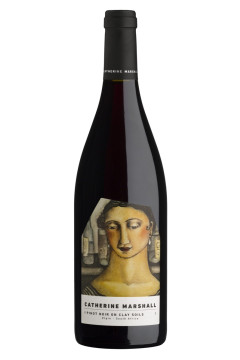


Catherine Marshall Pinot Noir on Sandstone Soils 2024
Catherine Marshall Pinot Noir on Sandstone Soils is a refined, mineral-driven red with bright red fruit, earthy depth, and fine, suede-like tannins—beautifully balanced and expressive.
Soft & Supple
£20.55
| Producer | Catherine Marshall |
|---|---|
| Country | South Africa |
| Region | Stellenbosch |
| Wine Type | Red Wine |
| Body / Style | Soft & Supple |
| Grape Blend | Pinot Noir |
| Bottle Size (ml) | 750 |
| % Abv | 13.5 |
| Vintage | 2024 |
| Special Features | Vegan |
| Extra Info | Elegant, savoury, textured |
| Food Pairing Guide | Perfect with roast duck, mushroom risotto, or grilled salmon. Also excellent with charcuterie or earthy vegetarian dishes. |
| Terroir | Cape Sandstone |


Crafted with a minimalist, terroir-focused approach, Catherine Marshall’s Pinot Noir on Sandstone Soils captures the purity and elegance of Pinot grown on lighter, well-drained sandstone. The wine opens with vibrant notes of pomegranate, cranberry, and red cherry, layered over subtle savoury, ferrous aromatics. On the palate, it’s textural and nuanced, with mouth-filling red fruit and fine, dry tannins that add structure and complexity. It’s a graceful, site-specific Pinot Noir that speaks of both place and precision—lively yet grounded, fresh yet serious.
The bunches are de-stemmed and 60% crushed and the berries are hand sorted. The mash from the various batches are cold soaked for three days in stainless steel tanks before yeast activity commences where colour and some tannin extraction occur. Fermentation is both spontaneous and some batches are inoculated with a yeast culture depending on site – soil and style elements. Juice and skin are punched down with a paddle, known as “pigeage” and turned daily to control even heat distribution between the skin cap on top and must juice below. Tannin and flavour extractions from the skins are carefully monitored at this stage. Once fermentation is completed, the wine is tasted and selected on tannin and flavour attributes and manually pressed in an 800kg capacity stainless steel basket press. The combinations selected are kept as separate fractions to create as many blending profiles as possible for the final assemblage. The secondary Malo-lactic fermentation is completed in 225 and 300 litre oak casks where, once all the malic acid is converted to lactic acid, is decanted off the solid lees (dead yeast cells) and further matured for 9 to 12 months in a combination of third and fourth filled Burgundy coopered casks. The approach to chemical additions and mechanical intervention is kept to the absolute minimum so that the natural integrity of the variety is respected and expressed. Once maturation is complete, each barrel is assessed, and the resultant blend of the chosen barrels are assembled and then lightly filtered to bottle.
Write Your Own Review
Other Similar Wines


Other Wines From This Producer