


Lukas Van Loggerenberg Kameraderie 2023
Kameraderie offers a fresh, mineral-driven white with citrus-and-stone-fruit aromas — think lemon/lime zest, green apple or yellow plum — with a hint of herbal / fynbos character and soft oak spice. On the palate it's clean, focused and textured: bright acidity and a saline-mineral backbone support layers of ripe fruit and a subtle herbal lift, finishing dry and refined.
Special Price
£35.95
Regular Price
£41.50
| Producer | Van Loggerenberg Wines |
|---|---|
| Country | South Africa |
| Region | Swartland |
| Wine Type | White Wine |
| Grape Blend | Chenin Blanc |
| Bottle Size (ml) | 750 |
| % Abv | 13 |
| Vintage | 2023 |
| Special Features | Vegan |
| Extra Info | Granite-grown Old Vine Chenin |
| Food Pairing Guide | Great with shellfish or seafood (oysters, scallops, grilled prawns), white-meat dishes (herbed chicken, roast pork), creamy goat cheeses, citrusy salads — even lightly spiced vegetarian dishes — and dishes featuring herbs or a bit of salinity (e.g. Mediterranean-style fare). |
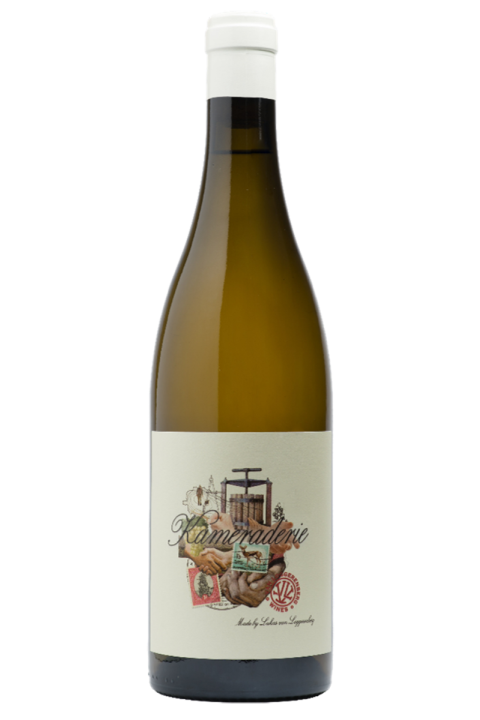


Kameraderie offers a fresh, mineral-driven white with citrus-and-stone-fruit aromas — think lemon/lime zest, green apple or yellow plum — with a hint of herbal / fynbos character and soft oak spice. On the palate it's clean, focused and textured: bright acidity and a saline-mineral backbone support layers of ripe fruit and a subtle herbal lift, finishing dry and refined.
Label story:
"For us everything in life is about camaraderie, about savoring moments with those closest to you. However, camaraderie is not only between friends but also between the farmer, workers in the vineyards and vines and about the final product being shared between friends over a good meal. The stamps show a bit of our heritage with the ship symbolizing the Dutch settlers to the Cape and the Springbok being our South African National animal."
This wine is 100% Chenin Blanc from old bush vines on decomposed-granite soils in the Paardeberg/Swartland region of South Africa. Grapes are hand-harvested, whole-bunch pressed, then fermented spontaneously (native yeasts), and matured partly in concrete tanks and partly in old French oak (used barrels) on lees — typically no fining or filtration before bottling.
Write Your Own Review
Other Similar Wines


Old Road Wine Stone Trail Chenin Blanc 2020
Special Price
£32.95
Regular Price
£38.95


Other Wines From This Producer
