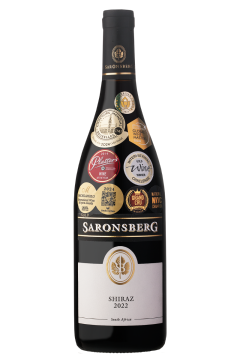


Saronsberg Viognier 2020
This wine is the ideal accompaniment to foods with subtle spicy aromas and flavours.
Aromatic
Special Price
£14.95
Regular Price
£19.50
| Producer | Saronsberg |
|---|---|
| Country | South Africa |
| Region | Tulbagh |
| Wine Type | White Wine |
| Body / Style | Aromatic |
| Grape Blend | 100% Viognier |
| Bottle Size (ml) | 750 |
| % Abv | 13.5 |
| Vintage | 2020 |
| Special Features | Sustainable |
| Extra Info | Lightly oaky and balanced |
| Food Pairing Guide | Enjoy with seafood, shellfish, and chicken. |
| Terroir | Partially weathered shale as well as red/yellow clay-loam soils |



Saronsberg Viognier has a light straw colour and flavours of honey, pear, apricot and delicate floral notes. It has a rich, silky palate with subtle spice and yellow fruit flavours, light oak and a balanced fresh finish. Although it spent 11 months in oak, we strive to produce a wine that is still lively and fresh with varied and delicate flavours, showcasing the subtleties and finesse that Viognier is capable of. The nose is sweet and floral with hints of stone fruits. On the palate you can expect honey, pear, apricot and delicate floral notes. It has a rich, silky palate with subtle spice and yellow fruit flavours.
Flanked on all sides by mountains in the Upper Breede River Valley, Tulbagh is utterly unique in its topography and natural beauty. It was this special character that attracted the first settlers here over three hundred years ago, and the same quality which led to the selection of Tulbagh as the site for Saronsberg winery. Recognising the distinctive terroir and potential of the valley, Saronsberg has joined the mission initially led by Rijk’s Cellar to prove the region’s capacity for producing wines of outstanding quality. Saronsberg consists of two farm portions formerly known as Waveren and Welgegund. The farm originally formed part of the beautiful and historic Twee Jonge Gezellen (TJG) until it was divided between the two Krone brothers in the 1950s. Waveren and Welgegund, which lie on either side of TJG, were acquired in 2002 and renamed after the commanding mountain whose slopes are home to a portion of their vines: Saronsberg. The two sites are distinctly different in terroir, with broad disparities in altitude, aspect, soil type, wind and rainfall patterns and temperature producing grapes with strongly contrasting characteristics. The immediate construction of a cellar was not part of the initial plan, but a wildfire two months after the acquisition of the farm meant the original strategy of gradually replanting vineyards had to be re-assessed. Although the farm’s best vineyards – most located on a section of Welgegund known locally as “Die Erf” – were saved, a more assertive planting program was initiated in 2003. On 25 January 2004, Saronsberg’s winemaking history officially began with the harvest of our first Sauvignon Blanc grapes – a momentous occasion that was celebrated 2 weeks later with a harvest party, then again the following year when Saronsberg reaped numerous awards for the 2004 vintage.
Flanked on all sides by mountains in the Upper Breede River Valley, Tulbagh is utterly unique in its topography and natural beauty. It was this special character that attracted the first settlers here over three hundred years ago, and the same quality which led to the selection of Tulbagh as the site for Saronsberg winery. Recognising the distinctive terroir and potential of the valley, Saronsberg has joined the mission initially led by Rijk’s Cellar to prove the region’s capacity for producing wines of outstanding quality. Saronsberg consists of two farm portions formerly known as Waveren and Welgegund. The farm originally formed part of the beautiful and historic Twee Jonge Gezellen (TJG) until it was divided between the two Krone brothers in the 1950s. Waveren and Welgegund, which lie on either side of TJG, were acquired in 2002 and renamed after the commanding mountain whose slopes are home to a portion of their vines: Saronsberg. The two sites are distinctly different in terroir, with broad disparities in altitude, aspect, soil type, wind and rainfall patterns and temperature producing grapes with strongly contrasting characteristics. The immediate construction of a cellar was not part of the initial plan, but a wildfire two months after the acquisition of the farm meant the original strategy of gradually replanting vineyards had to be re-assessed. Although the farm’s best vineyards – most located on a section of Welgegund known locally as “Die Erf” – were saved, a more assertive planting program was initiated in 2003. On 25 January 2004, Saronsberg’s winemaking history officially began with the harvest of our first Sauvignon Blanc grapes – a momentous occasion that was celebrated 2 weeks later with a harvest party, then again the following year when Saronsberg reaped numerous awards for the 2004 vintage.
The grapes were hand-picked in the early morning, force-cooled to 4 °C and pressed whole-bunch. Only the first light pressings were used. The juice was settled at 5 °C for 48 hours and then racked. A 25% portion underwent wild fermentation and the balance were inoculated with Vin 13 and CY3079 yeast in one third each of first-, second- and third-fill 500 litre Allier French oak barrels, using three different coopers. Fermentation continued for on average 21 days, the temperature of fermentation ranging between 13 and 18 °C. The wine was aged on its fine lees and malolactic fermentation was prevented to preserve the finer flavours. After a total barrel maturation period of 11 months the wine was racked, protein stabilised and bottled with a fine sheet filtration.
To underscore our commitment to the land we are proud to be members of the Integrated Production of Wine. IPW complies with international wine industry environmental sustainability criteria, including the 'Global Wine Sector Environmental Sustainability Principles as published by the International Federation of Wine and Spirits (FIVS) and the 'OIV. The production practices on farms and/or cellars of persons joining the scheme are evaluated and audited by the board.
We take social responsibility seriously and are members of WIETA. The association arose out of an Ethical Trade Initiative (ETI) pilot project in the wine industry in the late 90s. The pilot not only assisted the ETI, its retail corporate members, and South African partners in learning about, developing, and refining inspection methodologies in monitoring their base code but was also instrumental in bringing together the private sector, labour, and civil society stakeholders in and associated with the wine industry of the Western Cape to discuss and debate issues around ethical trade.
Saronsberg also underscores the principles of BWI (Biodiversity and Wine Initiative) which is a partnership between individual farms and the conservation sector with the aim of conserving the existing natural fauna and flora and through sustainable farming practices preserving it for future generations.
Our people are the driving force behind our winemaking excellence, customer service, and brand success. From our experienced winemakers and vineyard managers to our dedicated sales and marketing professionals, our team is passionate about crafting exceptional wines, fostering strong customer relationships, and upholding our winery’s values. With their diverse expertise, creativity, and collaboration, our team is the backbone of our winery’s operations, and we take pride in their unwavering commitment to producing wines of the highest quality.
Write Your Own Review
Other Similar Wines




Other Wines From This Producer